
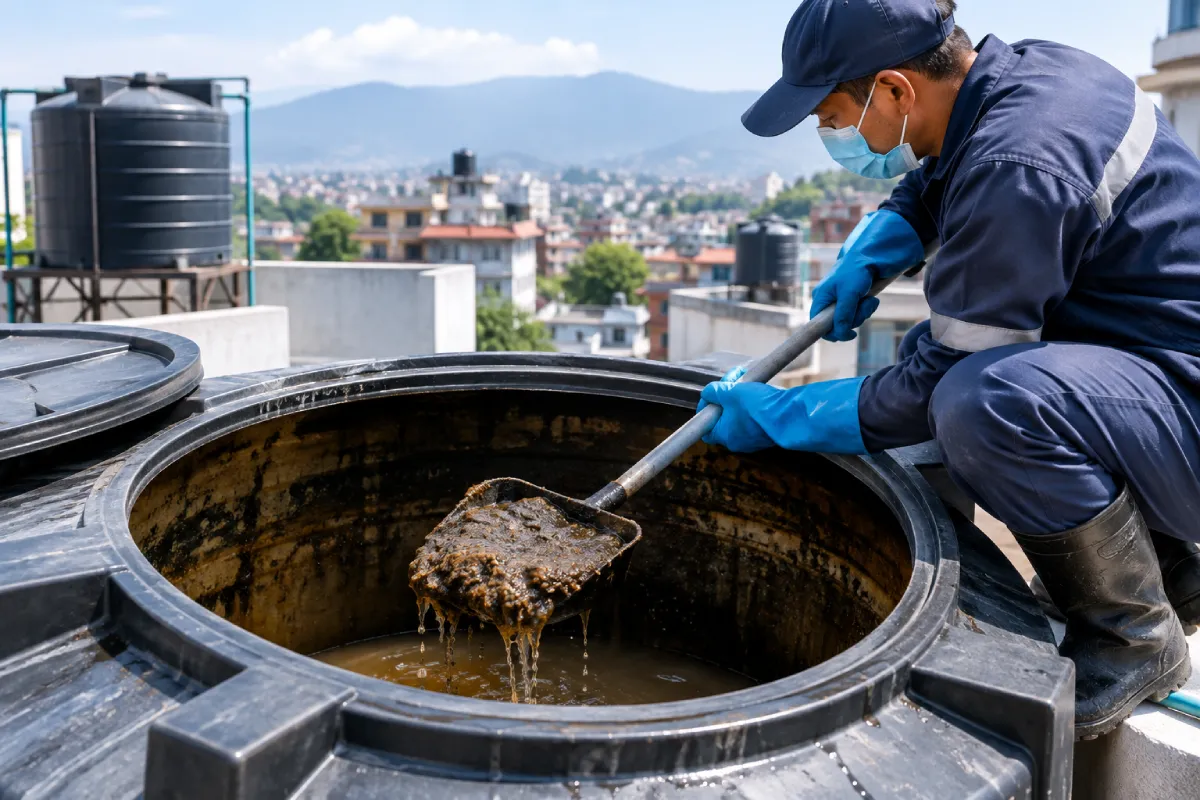
5 Health Risks of Drinking From a Dirty Water Tank

Imagine this: your child has had a stomach ache for the third time this month. You’ve changed their diet and given them medicine, and still nothing helps. You check everything—except the one place nobody thinks to check: the water tank on your roof. Most families never connect health problems to their water tank. But in Kathmandu, a dirty tank is one of the most common—and most ignored—reasons families keep falling sick again and again.
dirty water tank health risks

Here are 5 real health risks that come from drinking, cooking, or even bathing with water from an unclean tank.

1. Typhoid Fever

Typhoid is caused by bacteria that spread through contaminated water. When a tank isn’t cleaned, bacteria can grow inside it, especially in the mud and sludge that settle at the bottom over time.

Common symptoms: high fever, weakness, stomach pain, and loss of appetite.
Typhoid is very common in Kathmandu during the warmer months, and dirty water tanks are one of the biggest hidden causes.

2. Jaundice (Hepatitis A)

Jaundice, medically known as hepatitis A, spreads through water that has been contaminated with waste or bacteria. It affects the liver and can make a person seriously unwell for weeks.

Common symptoms: yellow skin or eyes, tiredness, nausea, and dark-colored urine.
Since Hepatitis A spreads through what we eat and drink, an unclean tank is a direct risk factor—especially if the tank hasn’t been cleaned in over a year.

3. Diarrhea and Stomach Infections

This is the most common—and most underestimated—problem. Even a small amount of bacteria in your drinking water can upset your stomach. Kids and elderly family members are usually affected the most.


Common symptoms: stomach cramps, loose motion, vomiting, and dehydration.
If someone at home keeps having stomach issues “for no reason,” the water tank is often the real reason.

4. Skin Irritation and Infections

It’s not just about drinking water—bathing with dirty tank water matters too. Algae, bacteria, and small particles in the water can cause itching, rashes, or skin infections, especially for people with sensitive skin.


Common symptoms: itching, redness, small bumps, or unexplained rashes after bathing.

5. Long-Term Weakness in Children

This one is easy to miss. When children are exposed to low levels of contaminated water over a long time, it doesn’t always cause a big, obvious illness—but it can slowly affect their energy, appetite, and growth. Parents often think their child is “just a picky eater” or “always tired,” without realizing the water at home could be part of the problem.

Why This Happens Even If Your Water Looks Clean

Here’s the tricky part—dirty water doesn’t always look dirty. Bacteria and small contaminants are invisible to the eye. Your water can look perfectly clear and still be unsafe, especially if the tank hasn’t been cleaned in the last 6–12 months.

That’s why waiting until the water “looks bad” is already too late. Regular cleaning — even when everything seems fine — is what actually keeps your family safe.

How to Protect Your Family

The solution is simpler than most people think:

  • Get your tank professionally cleaned every 6–12 months, depending on the type.
  • Watch for early warning signs like cloudy water, bad smell, or repeated stomach issues at home.
  • Don’t rely only on a quick rinse—bacteria stick to the tank walls and need proper antibacterial treatment to fully clear.
  • If anyone at home has had recurring stomach or skin issues, get the tank checked immediately, not just when it’s “due.”

Frequently Asked Questions

Can I tell if my water is unsafe just by looking at it?

Not always. Bacteria and many contaminants are invisible. Clear-looking water can still carry health risks if the tank hasn’t been cleaned recently.
Once the tank is professionally cleaned and treated, you should notice a difference in taste, smell, and clarity almost immediately.
Boiling can kill some bacteria, but it doesn’t remove sediment, sludge, or the source of contamination—the tank itself still needs cleaning.
Rooftop tanks: every 6 months. Underground tanks: every 12 months. Clean sooner if you notice any warning signs.

Don't wait for symptoms to show up. Book a professional inspection today.

Table of Contents

Share with